
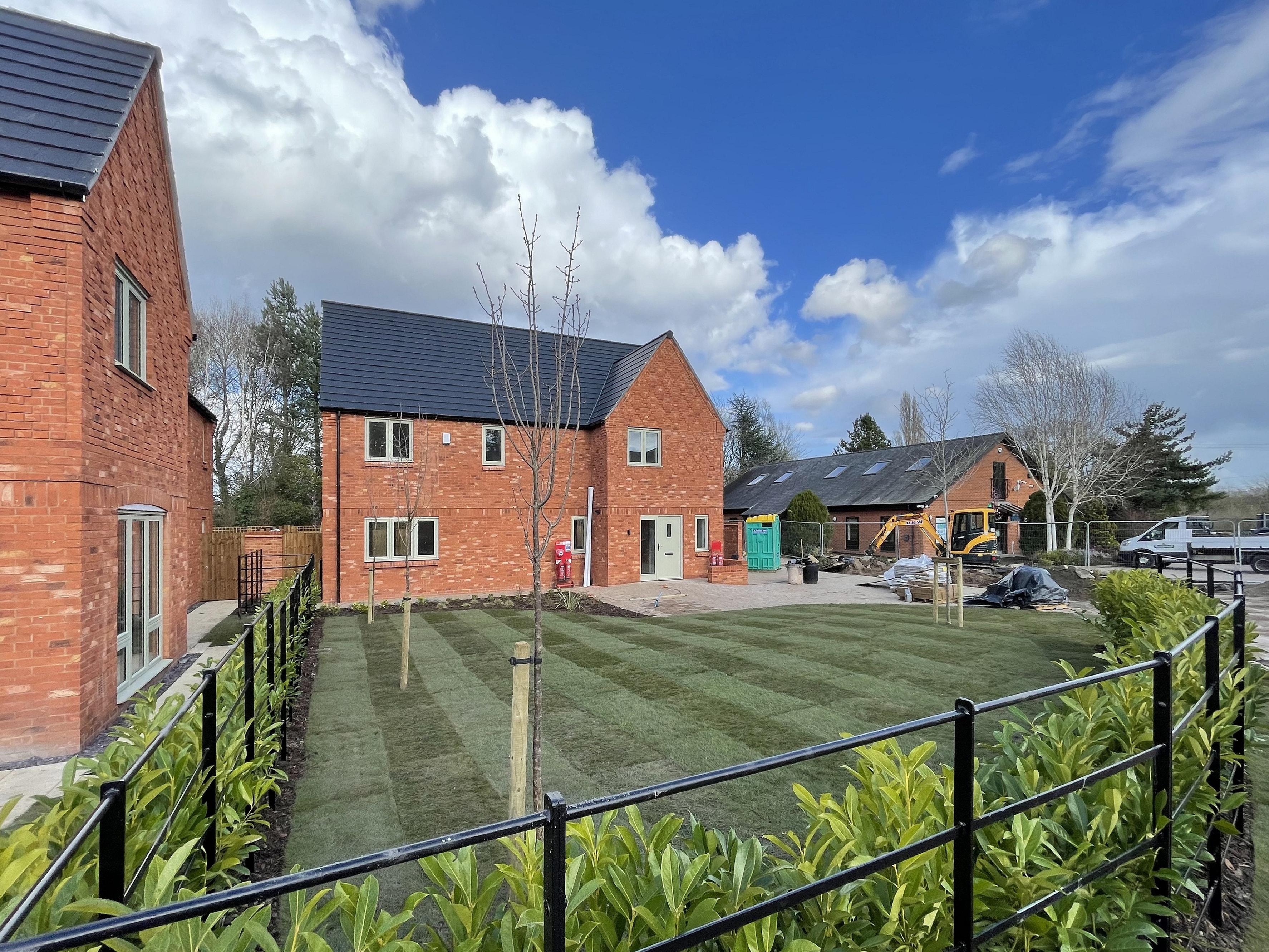
Gardener's SecretsUpdated 5 November 2026
Best hedging for privacy, and how to choose a screening hedge
A hedge takes a few years and some upkeep to become a screen. Here's how to choose one for height, speed, soil and shade, and where the law comes in.
By Adam Baguley, Chief GardenerFirst published
Part 1
What makes the best hedging for privacy?
The best hedging for privacy keeps its leaves all year, grows to the height you need, and suits your soil and the time you have to cut it. The RHS points out that hedges are usually planted to mark a boundary and give privacy, or for shelter from the wind, and that evergreens give privacy all year round.
Before you look at plants, answer five questions:
- How tall does the screen need to be, and how wide can the hedge grow?
- Do you need cover in winter as well as summer?
- How quickly do you need it, and how often will you cut it?
- What is the soil, and does the line get sun or shade?
- Who is on the other side, and where are the house, the drains and the road?
The RHS adds a practical one: look at which hedges grow well near you in similar spots and soils.
A hedge takes longer than a fence to give cover, and the RHS notes that hedges can be good for wildlife, particularly nesting birds. It also notes that new hedges can take three to seven years to reach the size you want, so plan for a gap in the meantime, or buy larger plants (part 5).
Part 2
Evergreen or deciduous?
For privacy, the RHS's advice is plain: an evergreen hedge gives shelter and privacy all year round. The trade off is upkeep. The RHS says evergreens tend to need more maintenance, and pruning every year, ideally twice.
Conifers are a popular evergreen choice. The RHS warns that, apart from yew, a neglected or overgrown conifer hedge cannot be brought back, so a conifer hedge has to be cut regularly from the start.
Deciduous hedges lose their leaves in winter, so they give less privacy then. They have their own strengths:
- Beech holds its brown leaves through the winter until spring, so it still screens, and it suits a formal hedge.
- Hornbeam is similar, holds its leaves for less long, and suits cold spots better than beech.
- A deciduous hedge filters the wind in winter, where a dense evergreen can cause damaging turbulence.
- They are more forgiving: if a trim is missed for a year or two, they respond well to cutting back.
You can also mix the two: an evergreen where the view needs blocking all year, and a deciduous or mixed hedge along the rest of the boundary.
For a wildlife hedge, read native hedge plants: choosing and growing a hedge for wildlife.
Part 3
How tall, and how fast?
The RHS groups hedging plants by the height they can be kept at: small hedges at 30 to 90cm, medium at 90 to 120cm, medium to large at 90 to 180cm, and large hedges kept at over 180cm. For privacy you want one that can be kept at the height of the view you are blocking, usually from the medium to large group up.
A fast growing hedge gives cover sooner, but it also needs cutting more often. Leyland cypress is the clearest case. The RHS describes it as very rapid in growth and useful as a quick, tall screen, but less satisfactory as a smaller trimmed hedge, and says it must be planted and maintained with care. Western red cedar (Thuja plicata 'Atrovirens') is also described as rapid.
The RHS calls yew an excellent choice for a formal, dense hedge, growing more slowly than other conifers but up to about 30cm a year in good conditions, and one of the few that can be cut hard back if it gets overgrown.
Among broadleaved evergreens, the RHS's examples for screening include:
- Portuguese laurel (Prunus lusitanica), dense and bushy, and tolerant of partial shade;
- Elaeagnus × ebbingei, fast growing, with leaves silvery beneath;
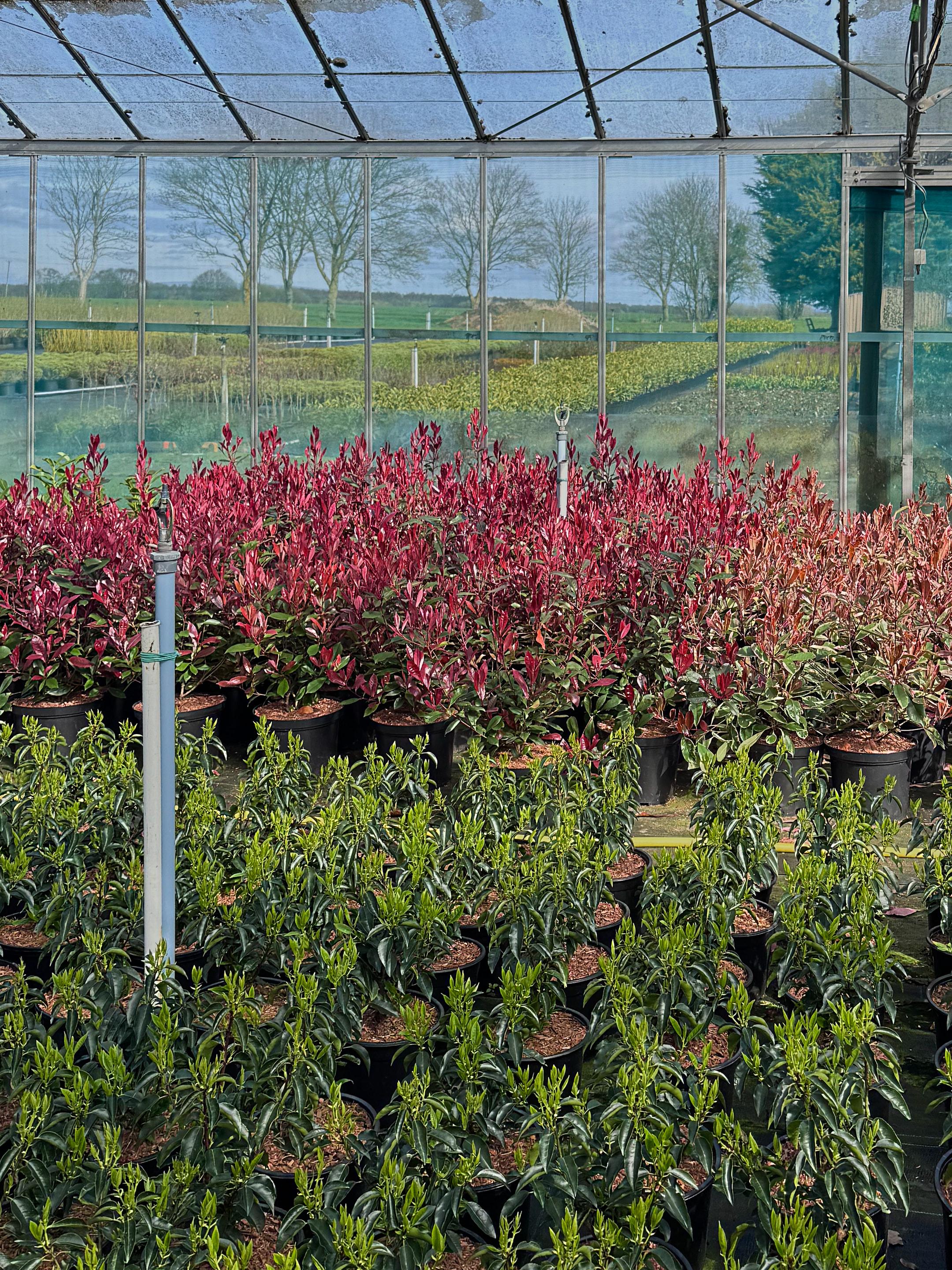
- Photinia × fraseri 'Red Robin', with coppery red new growth;
- holly, which the RHS lists for shade and for cold, exposed sites.
The RHS also suggests matching the leaf to the size of the screen. Large leaves such as laurel suit a tall screen; small leaves look out of proportion on a tall one.
These are the RHS's examples, not a list of what we have.
Part 4
Soil, shade and exposure
The RHS advises checking your soil before you choose, because clay, sandy and chalky soils each suit different hedges.
From its own lists of hedges for particular places:
- On heavy clay, it includes berberis, escallonia, holly, osmanthus, pyracantha, viburnum and both laurels.
- In shade, it includes spotted laurel (aucuba), holly, cherry laurel and Portuguese laurel.
- On cold, exposed inland sites, it includes beech, hornbeam, hawthorn, holly, both laurels, yew and western red cedar.
- On wet soils, it includes hawthorn and western red cedar.
Some popular hedging plants are only for mild or coastal gardens. The RHS lists griselinia and several hebes as for mild coastal areas only, and notes that pittosporum and Monterey cypress are not fully hardy inland.
If the line is exposed to strong wind, the RHS suggests that young screening plants may need a windbreak or shelter until they establish.
Light matters for the neighbours too. A tall evergreen hedge on the south side of a garden casts a long shadow in winter, on your side or theirs.
If you are not sure what soil you have, our guide to plants for clay soil explains the handful test, and the team can talk it through if you bring a description of the spot.
Part 5
Small plants or big ones?
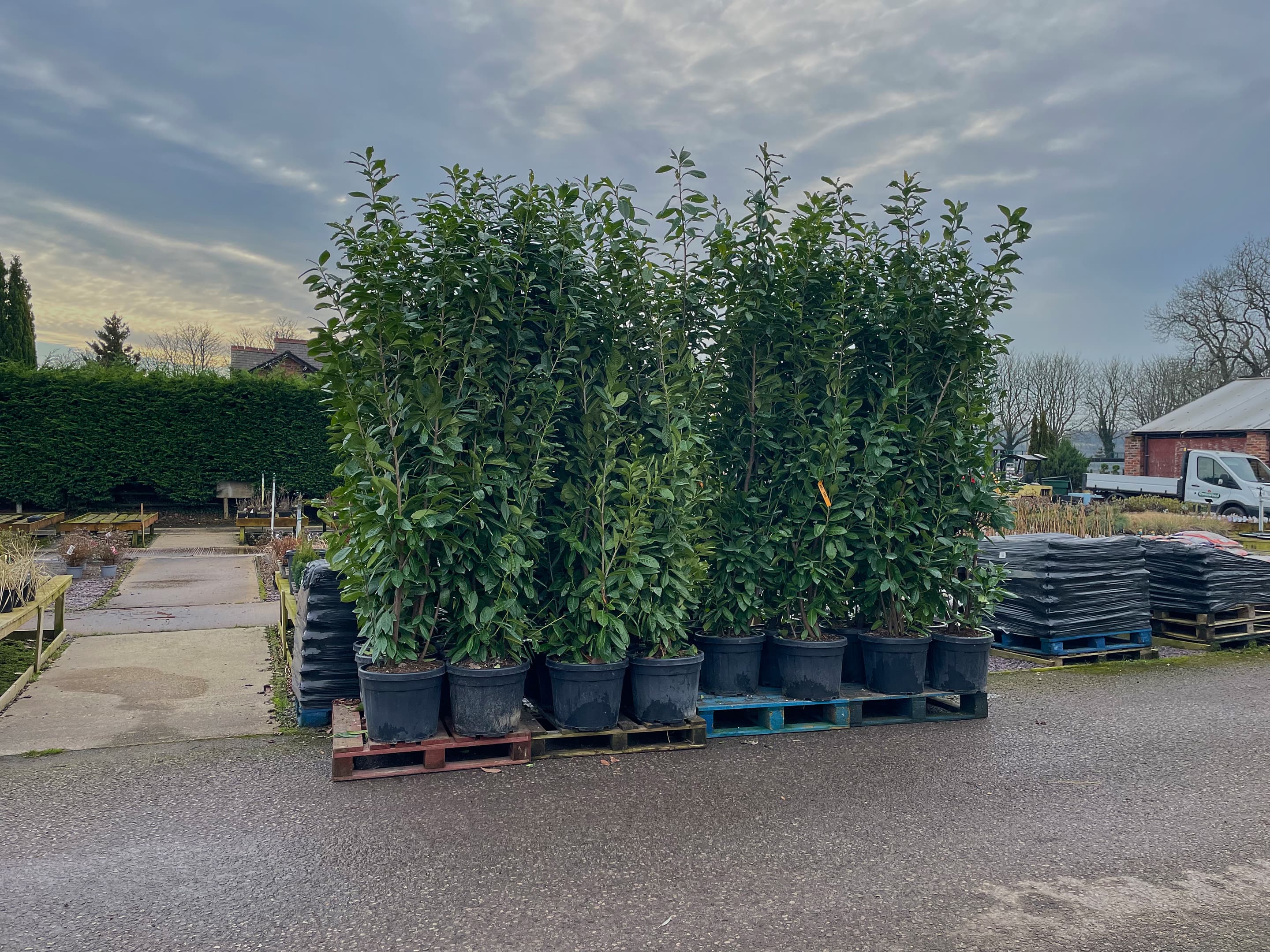
Hedging is sold in sizes from small whips to semi-mature plants, and the choice is between cost and speed.
The RHS notes that small transplants, called whips, about 60cm (2ft) tall, establish more quickly than larger plants, which often struggle in extreme weather such as drought or very wet spells. Planted close together, whips make a thick hedge, and because they compete with each other they need less trimming.
For screening, the RHS advises against planting very large specimens, and finds that shrubs establish best at no more than about 1m (3ft) tall.
If you need a screen quickly, semi-mature plants are the way to get one. The RHS points out that they cost more, and that they need extra care with watering for the first two years.
Many hedging plants come bare-root in winter. They are lifted from the field while dormant, with little or no soil on the roots, so they are light to handle and suit a long run. We sell bare-root hedging from November to March, and potted hedging the rest of the year. What we have changes through the season, so ask us what is ready this week and bring the length of your boundary.
Our guide to planting a bare-root hedge goes through marking out, spacing and the first cut.
Part 6
Planting a privacy hedge near a boundary
Where the hedge goes matters as much as what it is. The RHS advises setting a boundary hedge back a little from the boundary line, by about 90cm (3ft), so it can fill out before it overhangs the pavement or a neighbour's garden. That way the whole hedge stays on your land and you can cut both sides.
The RHS's planting points:
- Plant evergreens in early autumn, or from late autumn to late winter; plant deciduous hedges from mid autumn to late winter. Wait if the ground is frozen or waterlogged.
- Dig over a strip 60 to 90cm (2 to 3ft) wide and a spade's depth.
- Space plants 30 to 60cm (1 to 2ft) apart in the row, closer for smaller plants. For a hedge thicker than 90cm, plant a staggered double row, the rows 45cm (18in) apart.
- After planting, mulch 7.5cm (3in) deep and keep the hedge and 45cm (18in) on each side free of weeds.
- Water through dry spells for the first two years.
Think about what is below and beside the line. The RHS warns that roots can spread a long way, so keep drains, soakaways and buildings in mind. On clay soil where subsidence is a risk, it advises keeping a hedge no taller than its distance from the building.
If you would like it planted, our own team plants hedges too, along a fence line or round a whole plot.
Part 7
High hedges and the law
A privacy hedge that grows too tall can lead to a dispute. GOV.UK sets out when a council can step in. You can ask your council for a complaint form if a hedge is:
- two or more mostly evergreen or semi-evergreen trees or shrubs;
- over 2 metres tall;
- affecting your enjoyment of your home or garden because it is too tall.
You must try to settle the matter with your neighbour first, and you might have to pay the council a fee.
The RHS adds what the law, Part 8 of the Anti-social Behaviour Act 2003, does not do. You do not need permission to grow a hedge above 2m. A council cannot act until a hedge is over 2m and a complaint is made, it cannot order a hedge removed, and work that would kill the hedge is not allowed. Bamboo and ivy are not covered.
GOV.UK also sets out the everyday rules:
- You can trim branches or roots that cross onto your property from a neighbour's, but only up to the boundary.
- In a conservation area, or where trees in a hedge have a Tree Preservation Order, you might need the council's permission to trim them.
- If a hedge obstructs a road, the highways authority can ask you to cut it back.
- An owner is responsible for keeping a hedge from damaging a neighbour's property.
The RHS also suggests checking your deeds for covenants that limit planting.
Part 8
Keeping a privacy hedge in shape
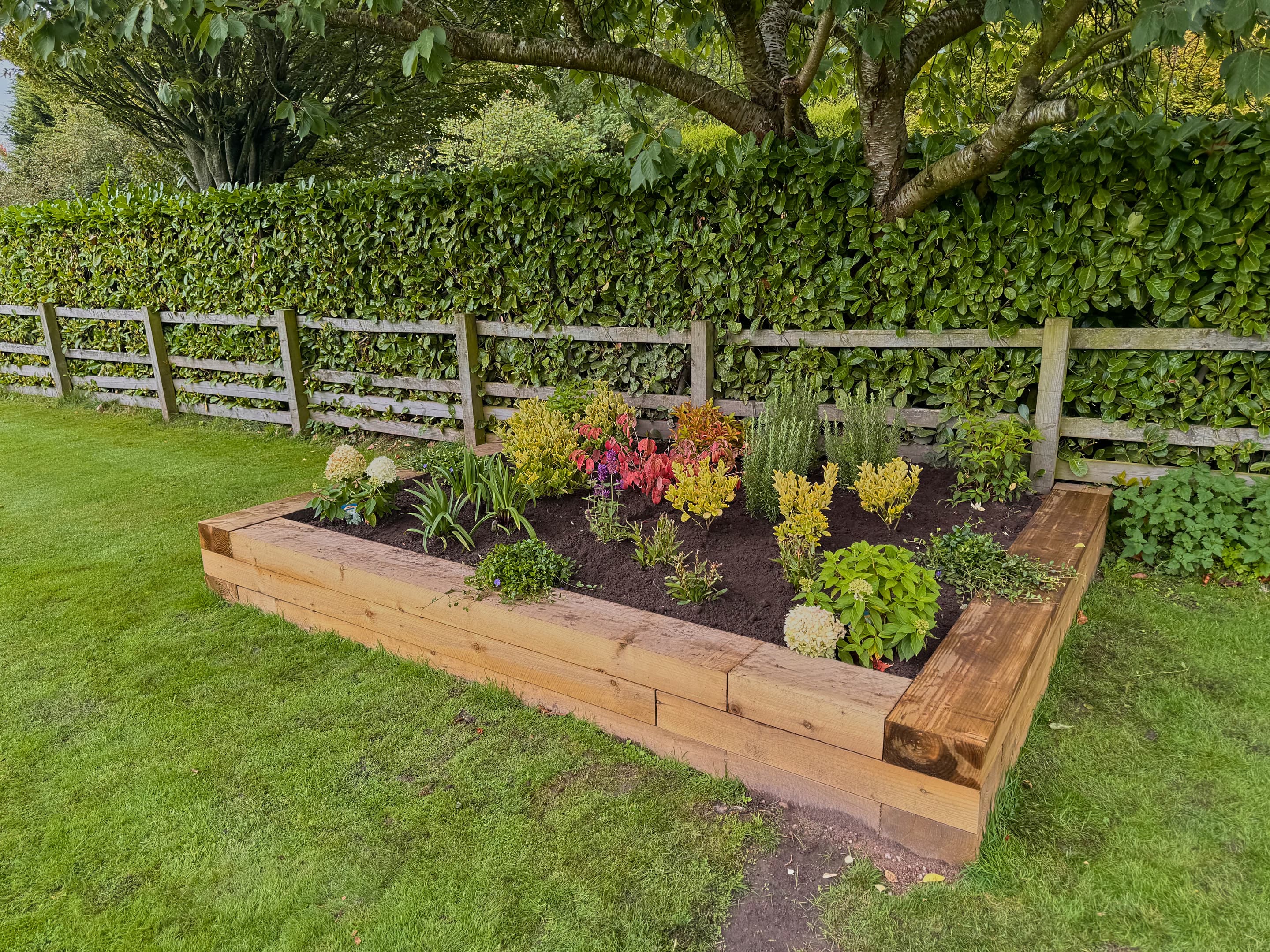
A privacy hedge needs regular cutting to stay dense and the height you want. The RHS says evergreen hedges need pruning every year, ideally twice, and that deciduous hedges are trimmed in late summer.
Cut the hedge a little narrower at the top than at the base, so light reaches the lower branches and the bottom stays leafy. Keep it at a height you can reach safely from the ground or a steady platform.
Birds nest in hedges. The Wildlife and Countryside Act 1981 makes it an offence to damage or destroy a nest while it is in use or being built, and the RHS advises that hedge work should not be done from March to August where birds are nesting. Check carefully before you cut in spring and summer.
Take care
Several popular hedging plants are poisonous. The RHS lists yew as toxic if eaten, and cherry laurel, Portuguese laurel, privet and western red cedar as harmful if eaten. Western red cedar and Leyland cypress can also cause skin allergies. Wear gloves and long sleeves when you trim, and keep clippings away from children, pets and livestock. With powered hedge trimmers, keep the cable behind you, stand on firm ground, and never reach over from a ladder.
See what we have in bare-root trees and hedging and in trees and shrubs, or read more in the Gardener's Secrets guides.
Planning a privacy hedge?
Bring the length of your boundary and ask us what hedging is ready.
Ask us at the nursery
196 Manchester Road, Rixton. Bring the length of your boundary, the height you need and a photograph of the spot.
Winter hours, until April · Mon to Sat, 9:00am – 4:30pmSundays closed