
Gardener's SecretsUpdated 5 November 2026
Box hedge alternatives, and what to do about box blight
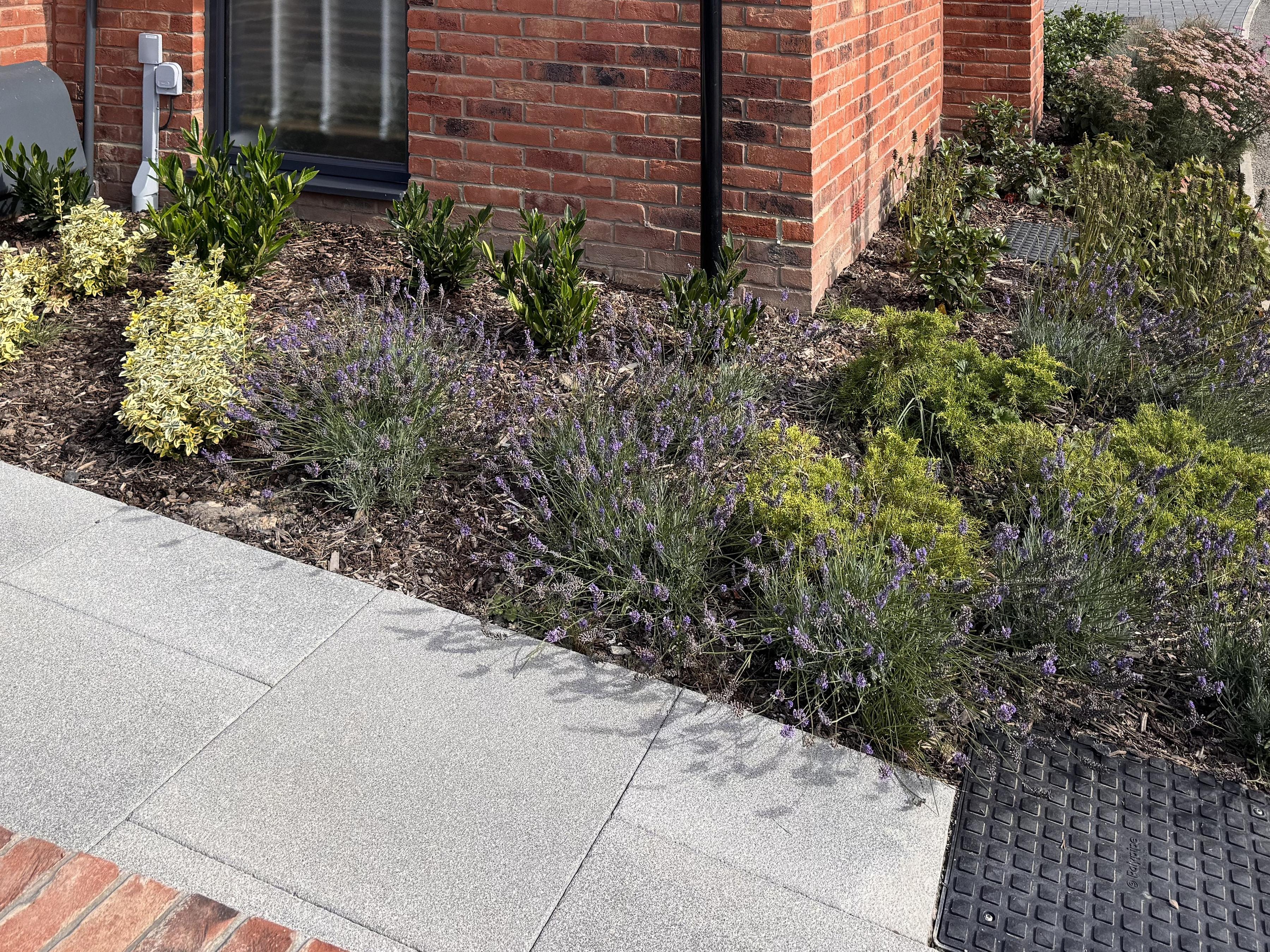
Box blight and box tree caterpillar have made box hard to keep. Here's how to tell blight, what to do about it, and which plants the RHS suggests in place of a box hedge.
By Adam Baguley, Chief GardenerFirst published
Part 1
Why gardeners look for box hedge alternatives
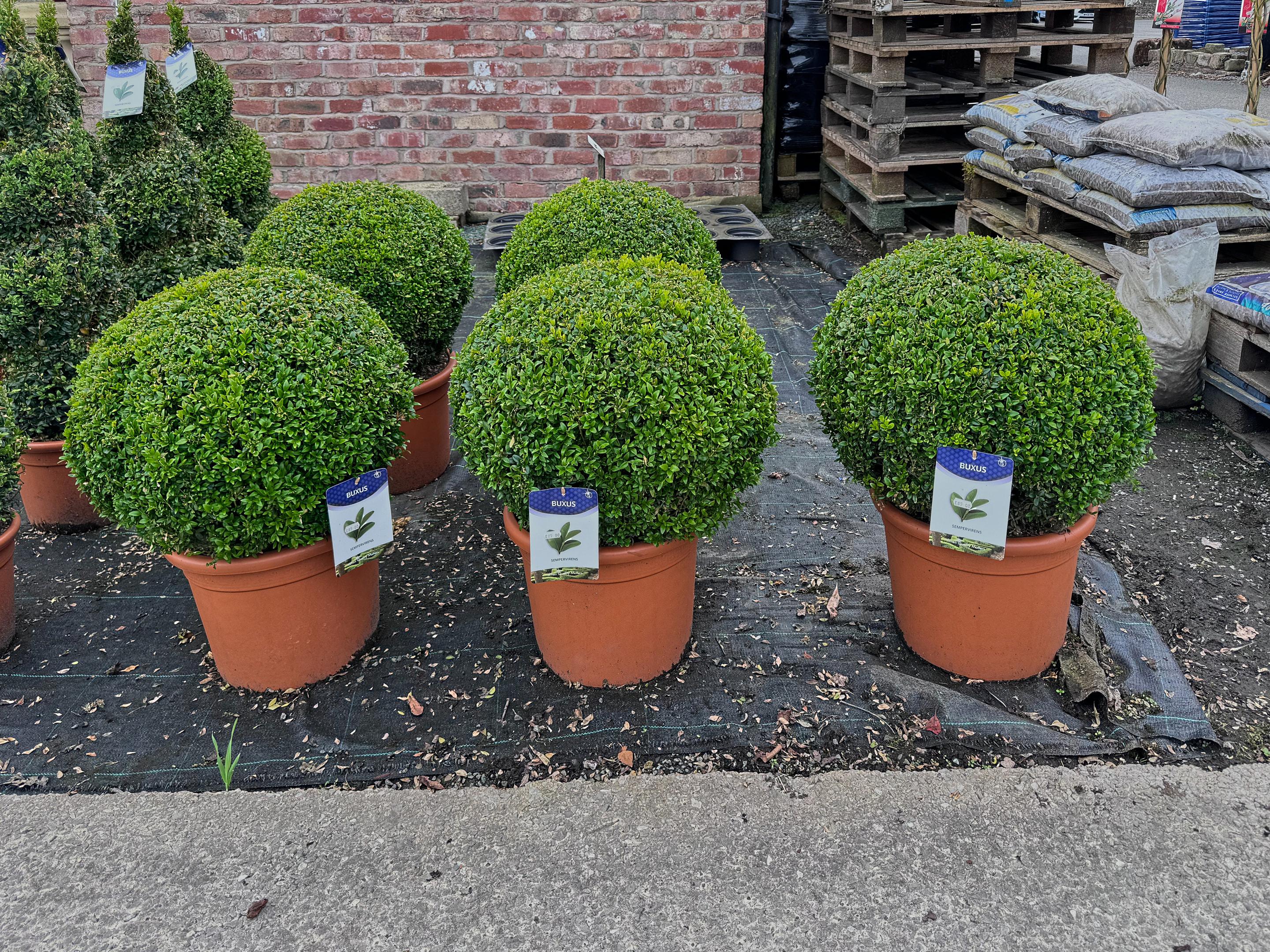
Box hedge alternatives are evergreen shrubs that can be clipped into a low hedge, an edging or a topiary shape in place of box (Buxus). Gardeners turn to them because of two problems. The RHS records that box blight arrived in 1994, and box tree caterpillar more recently, and that together they have made box hard to grow in many parts of the UK.
The RHS's view is that keeping either problem in check is time-consuming and expensive, harms wildlife, and is not sustainable year after year. Even biological controls, it notes, can affect other invertebrates.
Box was popular for good reasons, and they are worth knowing when you choose a replacement. The RHS lists them: box copes with a wide range of soils, light levels and temperatures, takes clipping well, regrows when cut back into old wood, needs trimming only once a year, and is cheap and easy to grow from cuttings.
The RHS also says plainly that no box alternative has all of those qualities. Part 6 sets out what to weigh.
If you still have box, or are not sure whether yours has blight, parts 2 to 5 cover telling the problem, dealing with it and the resistant kinds of box. If your box is already gone, part 7 lists what the RHS suggests in its place.
Part 2
How to tell box blight
Box blight is a fungal disease of box leaves and stems, caused by two closely related fungi, Calonectria pseudonaviculata and Calonectria henricotiae. The RHS lists these signs:
- leaves turn brown and fall, leaving bare patches;
- black streaks and dieback on young stems;
- in wet weather, white spore masses on the undersides of infected leaves.
To check for spores, the RHS suggests putting a few leaves in a plastic bag with damp tissue for a few days. White spore masses point to box blight. Pink ones point to Volutella blight, a second, less serious disease of box.
The RHS notes that blight often hits whole sides or the tops of hedges, especially in damp, shady spots. It can show at any time of year, but it is most active in rainy seasons and spreads very fast in warm, humid weather.
Box tree caterpillar also strips box, but it leaves different signs. Look for cobweb-like webbing, green and black caterpillars, and leaves with curved bites taken out of their edges.
Getting the cause right matters, because the RHS stresses that blight takes a lot of effort to manage and is easier to deal with the earlier it is caught.
Part 3
What to do if your box has blight
The RHS puts good growing practice first, and chemicals, if used at all, last and sparingly. If blight breaks out, it suggests these steps:
- Dig up and destroy box that is badly affected, or plantings that matter less, especially if you are trying to save a prized hedge.
- On box you want to keep, cut back or cut out the affected parts.
- Clear fallen leaves from the middle of the plants and round their base, and strip off the surface of the soil.
- Bag all infected material as you go, so nothing drops round the garden, and put it in the bin, not on the compost heap.
- Feed plants you have cut back with a general fertiliser, to help them recover.
Step 3 matters because, the RHS explains, both blight fungi can survive on fallen leaves for up to six years, and produce spores again when the weather suits them. The spores spread in water, in rain blown by the wind, and probably on animals and birds.
To keep blight down on box you keep, the RHS advises:
- clip less often, so air moves through the plants, and give a hedge a rounded rather than flat top;
- prune only in dry weather;
- clean your tools with garden disinfectant or a mild bleach solution between one part of the garden and another;
- water at the base rather than overhead, and mulch under the plants to stop rain splashing spores up;
- feed moderately.
Part 4
Fungicides and the rules
The RHS recommends that home gardeners do not use fungicides on box blight. It points out that fungicides, organic ones included, can reduce the variety of life in the garden, harm soil health and do wider damage to the environment.
It also finds that a fungicide is unlikely to control box blight unless it is used alongside the steps in part 3. Where the risk is high and you do decide to use one, the RHS describes spraying 7 to 10 days before trimming and 7 to 10 days after.
If you use any product, use only one that is legally available to home gardeners in the UK. The RHS publishes a list of fungicides for gardeners for this reason, and warns against homemade mixes, which are unregulated and usually untested. Read the label before you buy, and follow it exactly.
Take care
Use only fungicides approved for use by home gardeners in the UK, and follow the instructions on the label for the dose, the timing, protective clothing, storage and disposal. Keep children and pets away while you spray and until it has dried. Never mix your own sprays, and never pour leftover product down a drain or onto the soil.
Part 5
Box with more resistance
If you want to keep box, the RHS notes real differences between kinds. Common box and its dwarf edging form, Buxus sempervirens 'Suffruticosa', the one often used for parterres, are very susceptible. Cultivars of Buxus microphylla are generally less susceptible than cultivars of Buxus sempervirens.
Some newer cultivars claim good resistance. Based on work in Belgium, the RHS lists 'Babylon Beauty', 'Faulkner', 'Heritage', 'John Baldwin', 'Belvédère', 'Rococo', 'National', 'Renaissance', 'Skylight' and 'Trompenburg' as less susceptible, and notes that not all of them are easy to find in the UK yet.
The RHS adds that, to be completely safe, you should choose an alternative plant. These cultivars are chosen for blight, and box tree caterpillar still feeds on box.
If you buy box, the RHS suggests keeping new plants apart from the rest of the garden for at least four weeks before you plant them. Nurseries may use fungicides that hold the disease back without killing it, and the wait lets any hidden infection show.
Part 6
What to ask of a box alternative
The RHS has been testing box alternatives, including a trial in the walled garden at RHS Garden Wisley, and has asked professional gardeners and its members what has worked. From that, it suggests these questions:
- Does it need to look like box, or would a different leaf, colour or flower suit?
- Is it hardy where you live? The RHS notes that hebes and pittosporum died at around minus 8°C in many places in the winter of 2022 to 2023.
- Will it stay neat at the height you want? Some shrubs dislike being kept short.
- Does it regrow when cut back into old wood?
- Is it easy to get, and easy to grow more of?
- Does it suit your soil?
- How often will it need clipping? The RHS says every alternative needs one to three trims a growing season, and some always look looser than box.
- Do you want a formal edge, or would a flowering, informal one do?
- Does it have pests or diseases of its own?
Several shrubs that look ideal on paper are only for sheltered gardens, and the RHS marks those clearly (part 7).
Part 7
Box alternatives the RHS suggests
These are the RHS's suggestions from its own lists and trial, not a list of what we have.
Small leaved and box-like
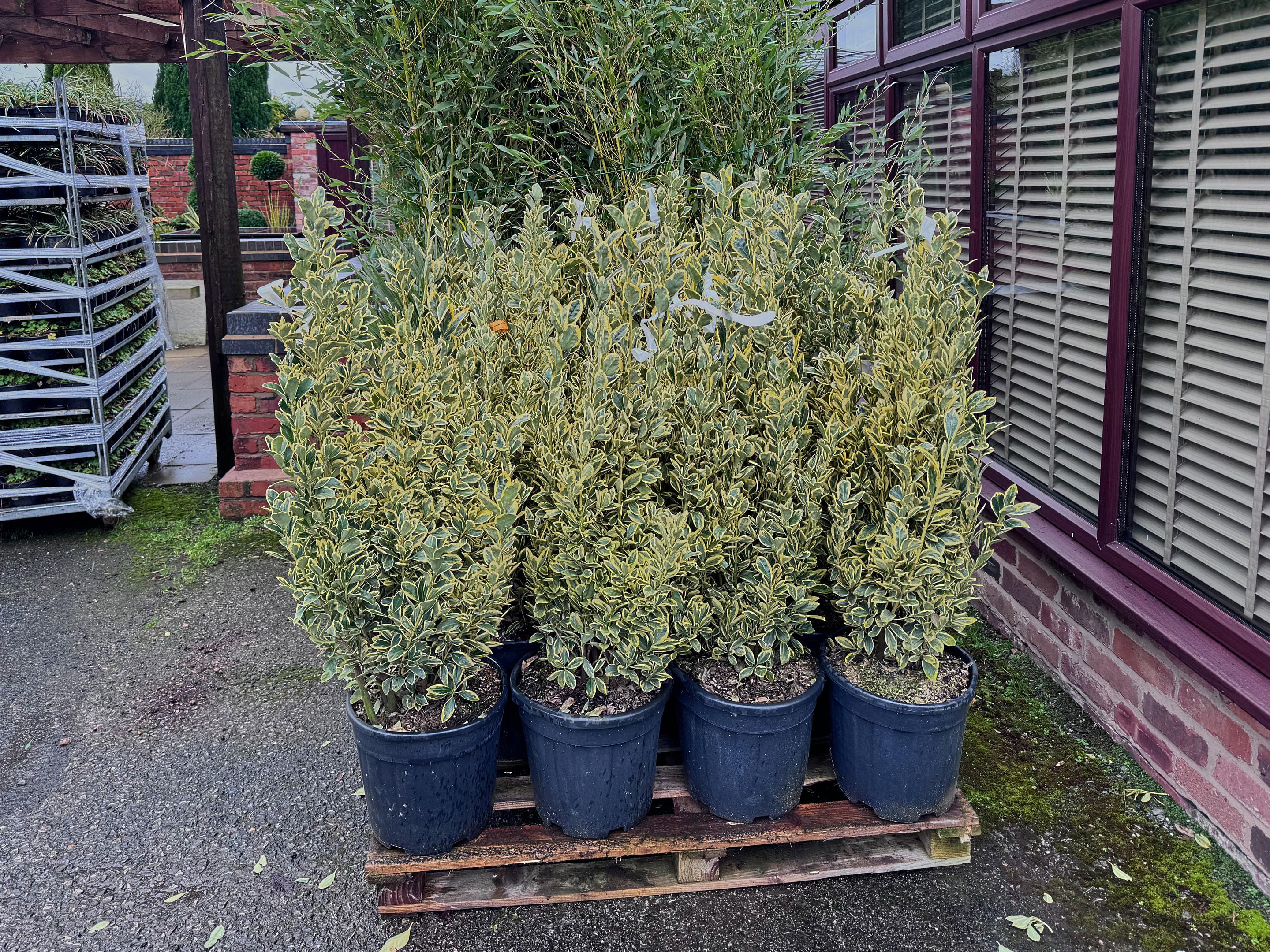
For low hedges and topiary up to about 90cm, the RHS's list includes boxleaf honeysuckle (Lonicera ligustrina var. yunnanensis), Ligustrum delavayanum, Cotoneaster conspicuus 'Decorus', sweet box (Sarcococca confusa), Euonymus japonicus 'Green Spire', Podocarpus nivalis, the low spreading yew Taxus baccata 'Repandens' and Berberis × stenophylla 'Corallina Compacta'. The RHS calls Euonymus very box-like, but notes it can suffer dieback in cold winds.
Flowering and informal
Rhododendron Bloombux was bred as a flowering box alternative and flowers in June, in a neutral to slightly alkaline soil. Germander (Teucrium) attracts bees and butterflies if it is left to grow a little between clips, and the RHS's list also includes lavender 'Hidcote'.
Taller hedges and topiary
For hedges and shapes of 90cm or more, the RHS's selection includes Osmanthus delavayi, Osmanthus × burkwoodii, Phillyrea latifolia 'Les Barres' and bay, though it notes that bay and pittosporum are not hardy below minus 8°C. It calls yew a top choice for its neat finish and its ability to regrow from old wood.
Colour
Box alternatives need not be green. In a visitors' vote at Wisley, shrubs with golden, purple and variegated leaves, such as privets, proved popular, and the RHS notes that berberis perform very well in the trial.
Ones to think twice about
Japanese holly (Ilex crenata) was the most widely planted alternative in the RHS survey but also the least successful; it dislikes wet winters and hot, dry summers. Pittosporum, corokia and myrtle are for sheltered gardens only.
Take care
Several of these plants are poisonous. The RHS lists yew as toxic if eaten, rhododendron, privet and germander as harmful if eaten, and euonymus as somewhat poisonous. Wear gloves when you clip, and keep clippings away from children and pets.
Part 8
Replacing a box hedge
When box has to come out, clear the old plants and their debris carefully. The RHS's advice for outbreaks applies here too: bag and bin the infected material rather than composting it, and clear the fallen leaves and the surface of the soil, because the fungi survive on fallen leaves for years.
The RHS advises planting evergreen box alternatives in spring, and deciduous ones in spring or autumn. Plants grown in pots can go in at any time of year, but they need careful watering if planted in summer.
For a new low hedge, the RHS's general hedge advice applies:
- dig over a strip 60 to 90cm wide, and take out the weeds;
- space plants 30 to 60cm apart, closer for smaller plants;
- mulch about 7.5cm deep after planting, and keep a band either side free of weeds;
- water through dry spells for the first two years.
Then clip. The RHS says each alternative responds to clipping once a year or more often as needed, and that some are better kept low than others.
What we have changes through the year, so ask us which box alternatives are ready this week, and bring the length of the edge you are replacing. If you would rather not do it yourself, our own team plants new hedges, from bare-root or potted plants depending on the season.
For a taller screen, read best hedging for privacy, and how to choose a screening hedge. See what we have in trees and shrubs, or read more in the Gardener's Secrets guides.
Replacing box?
Bring the length of your edge and ask us what is ready.
Ask us at the nursery
196 Manchester Road, Rixton. Bring the length and height of the hedge you are replacing, and a photograph of it.
Winter hours, until April · Mon to Sat, 9:00am – 4:30pmSundays closed