Gardener's SecretsUpdated 5 November 2026
Rhododendron care: soil, planting, watering and pruning
In the right soil, a rhododendron asks for very little. Here's what that soil is, how to plant one, and what the common problems mean.
By Adam Baguley, Chief GardenerFirst published
Part 1
What a rhododendron needs
Rhododendrons need acid soil that stays moist but drains well. The RHS puts the ideal between pH 5.0 and 6.0, rich in organic matter, in dappled shade and shelter from cold, drying winds.
Azaleas are rhododendrons too, so the same care applies to them. Most rhododendrons are evergreen; many azaleas lose their leaves in autumn.
The RHS notes that rhododendrons grow best where rainfall is high. In drier spells you will be making up the difference with the watering can, and the water you use matters (part 5).
Take care
Rhododendrons and azaleas are harmful if eaten, the RHS warns, and so is pieris, a close relative. The UK's Animal PoisonLine says pieris and rhododendron can cause stomach upsets in pets, and in some cases weakness, a slow heart rate and low blood pressure. Keep children and pets away from the leaves and flowers, and wash your hands after pruning. If you think a child has eaten part of the plant, get medical advice. If a pet has, call your vet straight away.
Part 2
Is your soil acid enough?
Before you plant, test the soil. A simple pH kit from a garden centre gives you a reading in a few minutes. Take samples from several spots in the bed, a spade's depth down, and mix them before you test.
The pH scale runs from 0 to 14. Seven is neutral. Below 7 the soil is acid, which the RHS also calls ericaceous; above 7 it is alkaline, or limy. A rhododendron wants a reading of 5.0 to 6.0. The RHS gives 6.5 as the best general reading for a garden, because most plants grow well there, so a soil that suits your lawn and borders can still be too limy for a rhododendron.
If the reading is above 7, do not plant a rhododendron in the ground. In alkaline soil its roots cannot take up the iron and other nutrients it needs, and the leaves turn yellow. The RHS says that reducing soil pH is not simple, so grow it in a pot instead (part 4).
If the reading is a little above 6, ask us before you plant. Bring the reading with you and tell us where the plant would go.
Your neighbours' gardens are a good clue as well. Where rhododendrons, camellias and heathers already thrive in the street, the soil is probably acid.
Part 3
Where and when to plant
Choosing the spot
The RHS advises dappled shade in a sheltered place, with these points to watch:
- Avoid deep shade under other trees, where a rhododendron grows thin and flowers poorly.
- Most will take a more open site if they are sheltered from cold, drying winds.
- Avoid frost pockets, where cold air settles on still nights.
- Avoid spots that catch the early morning sun. Sun on frozen buds and flowers thaws them too fast and damages them.
- Dwarf alpine kinds will take full sun, as long as the soil never dries out.
Planting
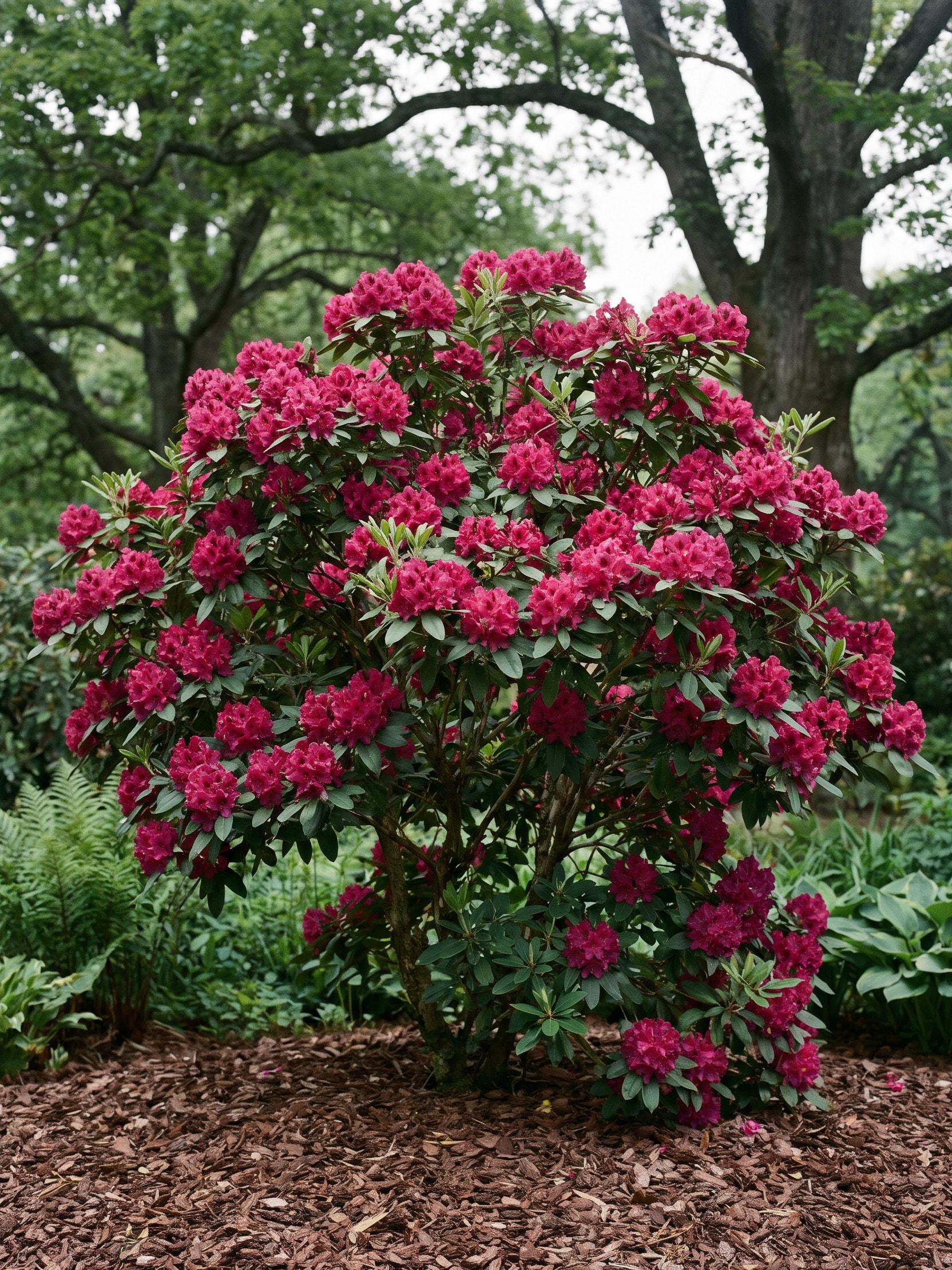
Plant in October, or in March and April. The RHS stresses one point above the others: do not plant too deeply. All rhododendrons root near the surface, and the roots should be only just covered with soil.
Dig a hole as deep as the root ball and two or three times as wide. Loosen the soil round it and mix in leaf mould or composted bark. Set the plant with the top of the root ball at the surface, fill in round it and firm it gently. Water it in well.
Leave room for the plant's full spread, which varies a great deal from one rhododendron to the next. Ask us how big the one you are choosing grows, if the label does not say.
Then mulch (part 5), which keeps the shallow roots cool and damp.
Part 4
Ericaceous compost and growing in a pot
Ericaceous compost is compost made for plants that need acid conditions, with a pH below 7. Rhododendrons, camellias, heathers and blueberries are the plants it is usually bought for. Ordinary multi-purpose compost is not acid enough.
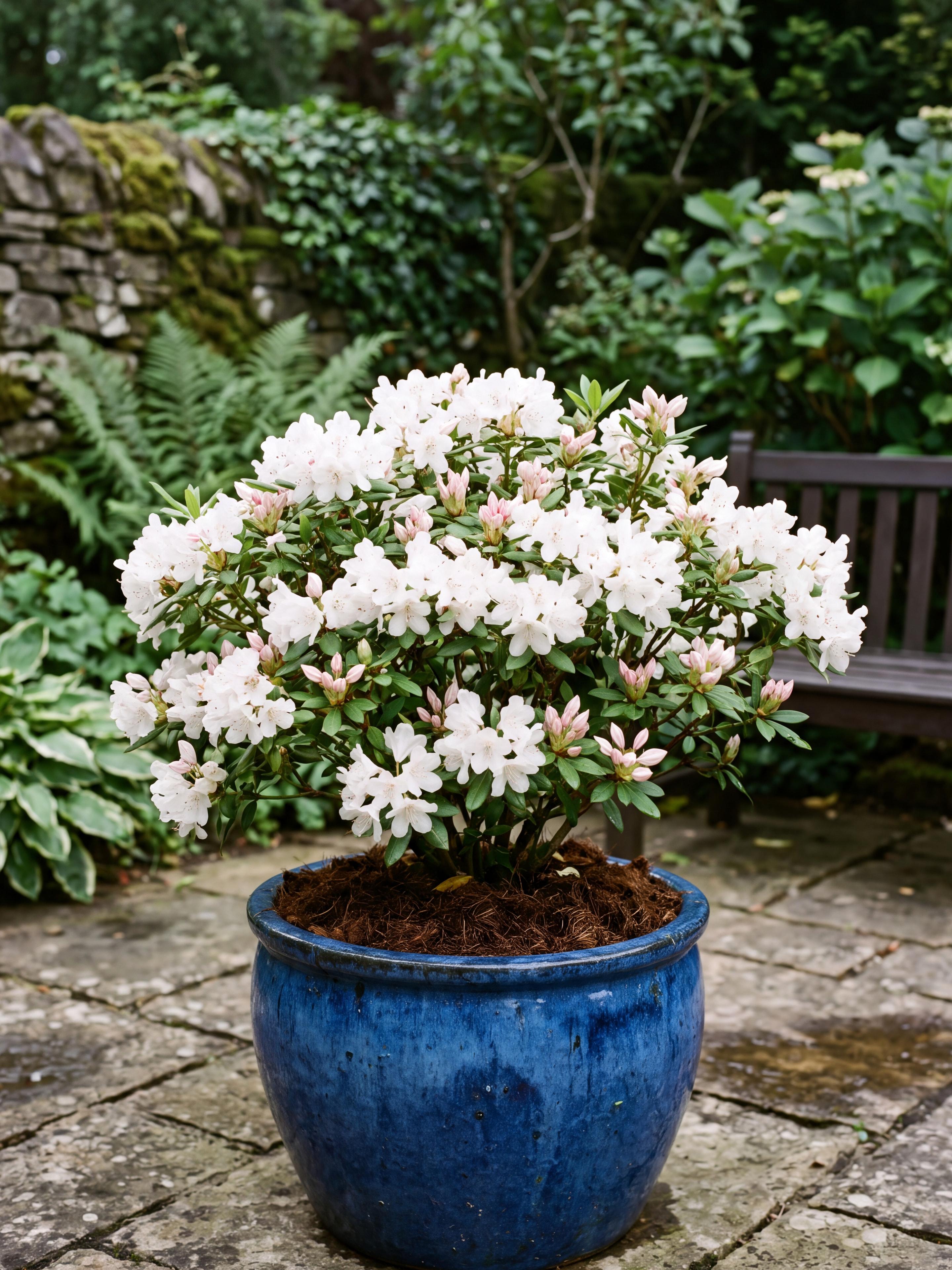
A pot is the answer if your soil is alkaline, and compact rhododendrons suit containers on a shaded patio. The RHS suggests a peat-free, loam-based ericaceous compost, a John Innes type. It holds its structure, and it makes watering and feeding easier to manage.
RHS research has found that peat-free ericaceous composts without loam also suit rhododendrons. Over time, though, they can lose their structure, drain poorly and starve the roots of air, and the leaves brown and die back. The RHS gives a routine that keeps them healthy:
- Repot every other year into fresh compost, in early spring as soon as growth starts.
- In the year between, scrape off the top 5cm of compost and replace it with fresh.
- You can go back into the same pot if you trim off up to a third of the roots to make room.
Use a pot with drainage holes, and stand it on pot feet so water can run away. A rhododendron in a pot relies on you for every drop of water, so check it often in dry or windy weather.
We sell compost alongside the plants in Rixton. Ask the team what we have that suits acid-loving plants.
Part 5
Watering and mulching
Use rainwater whenever you can. In hard water areas, the RHS explains, tap water carries too much calcium. Watered with it week after week, the soil round the roots slowly becomes less acid. If the water butt runs dry in summer, tap water will do for a month or two. Your water company publishes the hardness of the supply for your postcode, if you are not sure.
Rhododendrons form next year's flower buds in late summer. A short dry spell at that time can stop the buds forming, or leave them half formed so they dry up and drop the following spring. The RHS advises watering thoroughly and regularly during dry periods from July onwards.
Water at the base, enough to soak down to the roots, then leave it until the soil is drying again. Waterlogging harms a rhododendron too: the RHS lists it with drought as a cause of leaf drop.
The RHS recommends a mulch at least 7.5cm deep of chipped conifer bark or another acid material. Keep it loose and airy rather than firmed down, and top it up each spring while the soil is still moist. The mulch keeps the shallow roots cool, holds water in and slowly adds organic matter.
Part 6
Feeding
In good acid soil, rhododendrons are unlikely to need feeding at all, the RHS says.
Plants in pots, or in soil that is not quite acid enough, do benefit from a feed. The RHS suggests a slow-release granular fertiliser in spring, or a liquid feed made for ericaceous plants. Follow the amounts on the pack exactly. Rhododendron roots and leaves scorch if they are given too much.
If the leaves turn yellow between green veins, the soil is probably not acid enough for the roots to take up iron, manganese or magnesium. Feeding more of an ordinary fertiliser will not cure that. Check the pH, and use rainwater. Never put lime on or near the bed: the RHS notes that adding lime makes soil less acid.
Part 7
Deadheading and pruning
Deadheading
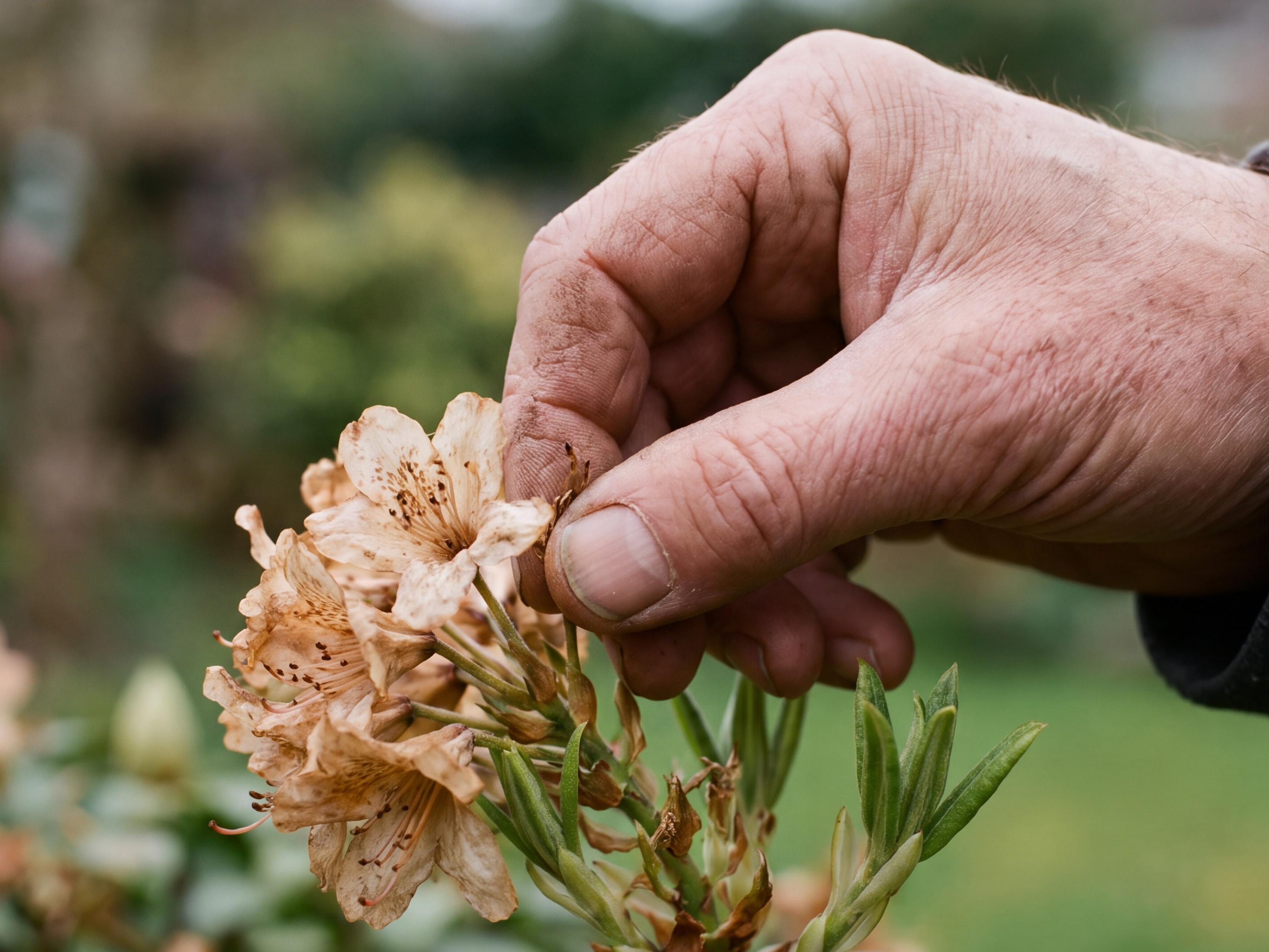
Rhododendrons need little pruning beyond taking out dead wood and removing faded flowers where you can reach them, the RHS advises. Snap the spent flower heads off carefully between finger and thumb once flowering is over, taking care not to damage the new buds just below. Deadheading tidies the plant, and it stops seed forming.
Pruning
If a rhododendron has outgrown its space, prune it as you would other evergreen shrubs, straight after flowering. Many rhododendrons respond well to hard cutting back, the RHS notes. Deciduous azaleas and rough-barked kinds respond best; smooth-barked kinds are less reliable.
After a hard prune, mulch the plant, feed it if the soil is poor and water it well, to help the new shoots come.
Wear gloves when you prune, and put the prunings in the green waste bin or on the compost heap, out of reach of children and pets.
Part 8
Common problems
Most rhododendron problems come back to soil, water or the weather:
- No flowers, or buds that drop unopened in spring: usually a dry spell the summer before, while the buds were forming. Water and mulch from July.
- Leaves rolling, drooping and then falling: drought, or a long spell of waterlogging. The oldest leaves go first.
- Some older leaves dropping in spring and summer: normal for an evergreen. Each year it sheds a share of its oldest leaves.
- Leaves drooping in hard frost: they usually recover when milder weather returns.
- Yellow leaves with green veins: a nutrient shortage, most often because the soil or compost is not acid enough (part 6).
- Brown, scorched leaves or damaged flowers: cold wind, frost or heavy rain.
- Notches eaten from the leaf edges: often vine weevil, especially on plants in pots.
The RHS also lists rhododendron leafhopper, scale insects, bud blast, azalea gall and honey fungus. If a plant is struggling and you cannot see why, bring a photograph of the plant and a close look at the leaves. We can tell you what to check.
GOV.UK lists Rhododendron ponticum among the invasive non-native plants most commonly found in England. You must not plant it in the wild or cause it to grow there, so never tip its prunings or seedlings over a fence into woodland or verges.
See what we have in trees and shrubs, or read more in the Gardener's Secrets guides.
Looking for shrubs?
Ask us what is ready this week.
Ask us at the nursery
196 Manchester Road, Rixton. Bring your soil reading and your questions about rhododendrons and other acid-loving shrubs.
Winter hours, until April · Mon to Sat, 9:00am – 4:30pmSundays closed