
Gardener's SecretsUpdated 5 November 2026
Plants for clay soil, and how to improve heavy clay
Clay is hard work to dig and slow to drain, but it is rich and holds water well. Here's how to tell if you have it, how to improve it, and which plants cope.
By Adam Baguley, Chief GardenerFirst published
Part 1
Is your soil clay?
Before you choose plants for clay soil, check that clay is what you have. The RHS describes a clay soil as one with more than 30 per cent of very fine clay particles, and gives a simple test you can do with a handful.
Take a lump of soil from a spade's depth, when it is moist but not sodden, and work it between your fingers:
- Clay feels slightly sticky and dense.
- Rubbed between finger and thumb, it feels smooth, not gritty.
- It rolls into a ball, and then into a sausage, without cracking.
- If the sausage turns shiny when you rub it, the RHS calls it a heavy clay.
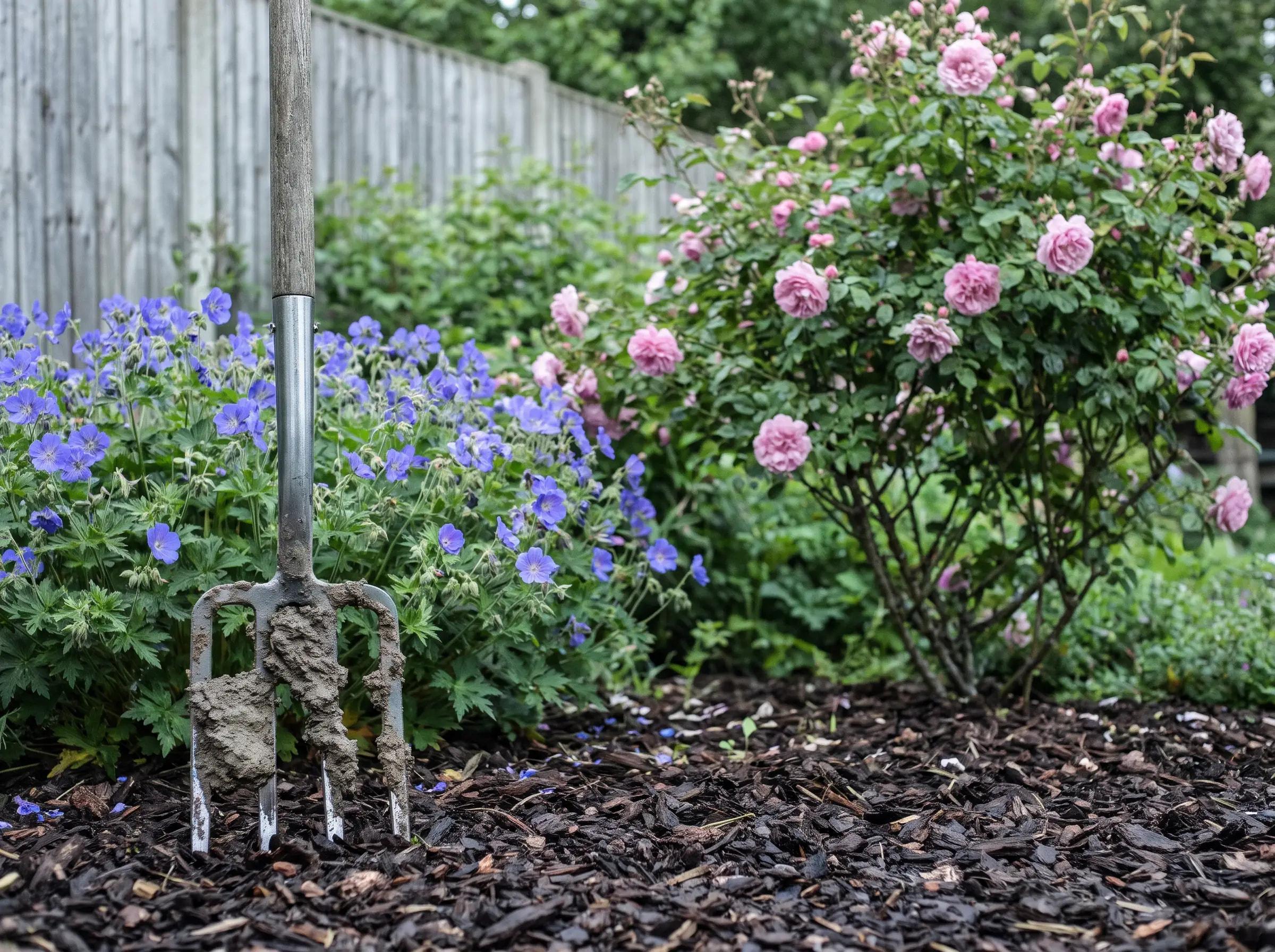
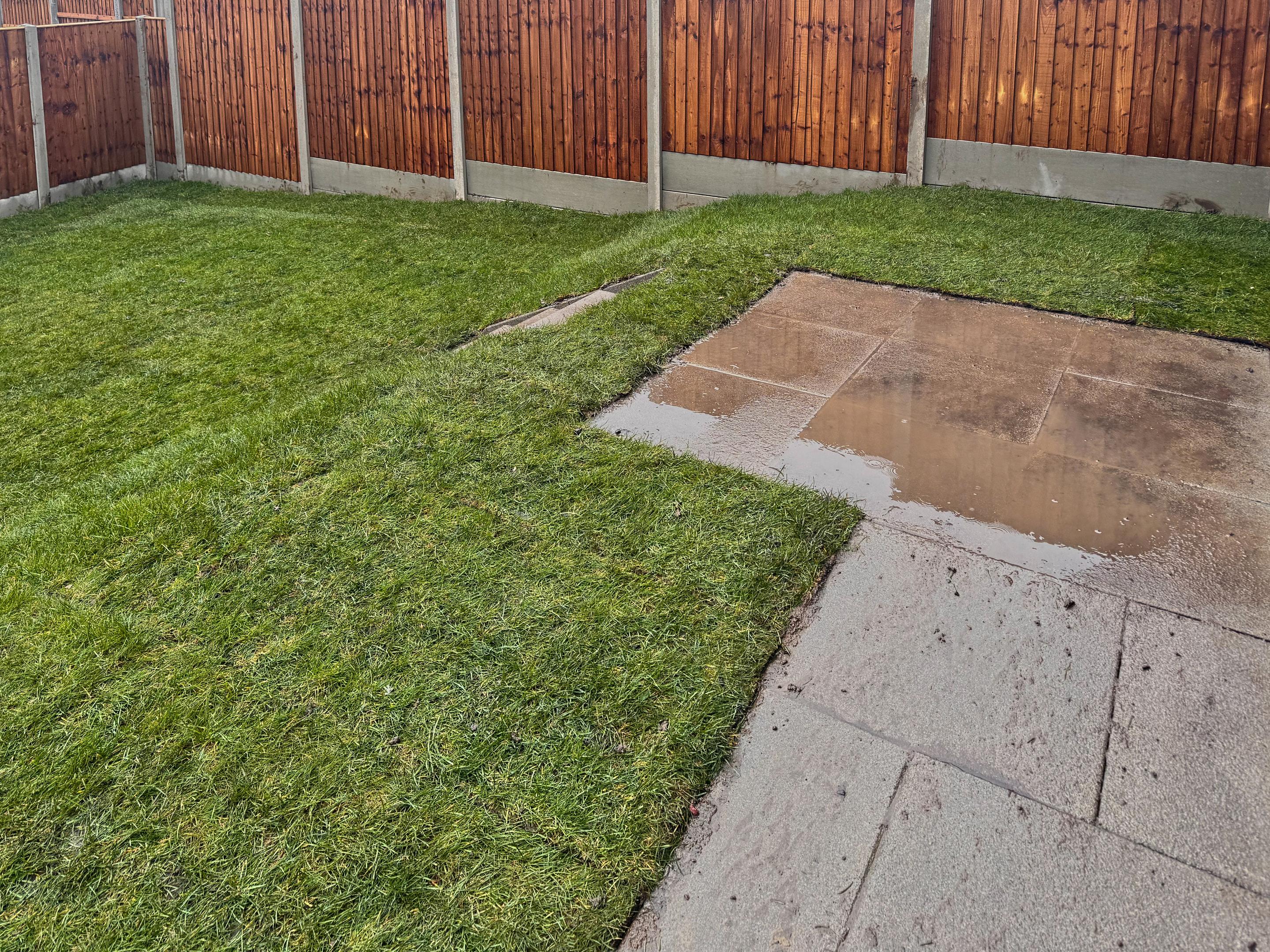
There are other signs in the garden. Puddles that sit on the surface for hours after rain, ground that sticks to your boots in winter, and cracks that open across the beds in a dry summer all point to clay.
For a wider view, the RHS points to the Soilscapes map from the National Soil Resources Institute, which shows the main soil type across England and Wales. It cannot tell you about your own bed, but it shows whether clay is likely where you live.
Clay is common in new-build gardens, where the ground has often been driven over and compacted as well. If that is your garden, our guide to choosing plants for a new-build garden covers the building site side of it.
A pH kit tells you how acid or limy the soil is, which matters when you choose plants and before you add lime (part 4). It does not tell you whether the soil is clay; the handful test does.
Part 2
What clay does well, and what it does badly
Clay has a poor name, but the RHS sets out real strengths alongside the problems.
What clay does well:
- It holds water, so plants on clay suffer much less in a drought than plants on sand.
- It is usually rich in the nutrients plants need.
- Some clays swell and shrink as they wet and dry, which the RHS notes can add to the soil's fertility.
What clay does badly:
- It is heavy to dig and hard to work.
- It drains slowly after rain.
- It warms up slowly in spring, so plants start growing later.
- Worked or walked on while it is wet, it loses its structure and packs down hard.
The last of these you can avoid, and it is worth the effort. The RHS warns that putting right damaged clay is slow and laborious, and that the damage should be avoided at all costs.
How hard a clay is to manage depends on the rain as much as on the soil. The RHS compares two of its own gardens: Rosemoor in Devon has a very sticky clay made harder by high rainfall, while Hyde Hall in Essex has a heavy clay that low rainfall makes much easier to handle.
Most of the trouble on clay comes from water: too much of it in winter, and a baked crust in summer. Organic matter, mulch and raised beds help with both, and they are the subject of part 4.
Part 3
When to dig, and when to keep off
Dig clay in autumn and early winter, while it is still fairly dry. The RHS explains that once the winter rain has soaked it, clay often cannot be worked or walked on until the middle of spring.
Ground dug over in autumn and left rough through the winter gets help from the weather. Frost freezes the water in the clods, then the thaw breaks them apart, so by spring the surface crumbles more easily. In wet parts of the country, the RHS notes, gardeners traditionally dig clay into narrow ridges, which lets the frost reach more of it and helps the water run off.
There is often only a short spell each year when clay is right to work: after it stops being waterlogged in spring, and before it bakes hard in late spring and summer. Watch for it, and plan the heavy jobs for then.
The test is simple. Squeeze a handful. If water runs out, or it smears into a slick, leave it alone. If it holds together and then breaks up when you press it, it is ready.
When you do have to work on wet ground, lay planks or boards to stand on. They spread your weight, so your feet do not pack the clay down.
If you want to plant early in a wet spring, the RHS suggests either building raised beds or covering the ground for at least six weeks beforehand with cloches or clear polythene, so it dries and warms first.
Part 4
How to improve clay soil
The aim is to make clay easier to work and to grow in. The RHS gives five ways, and they can be combined:
- Dig in plenty of bulky organic matter, such as manure or, best of all, composted bark. The RHS finds this makes a noticeable difference to how clay handles.
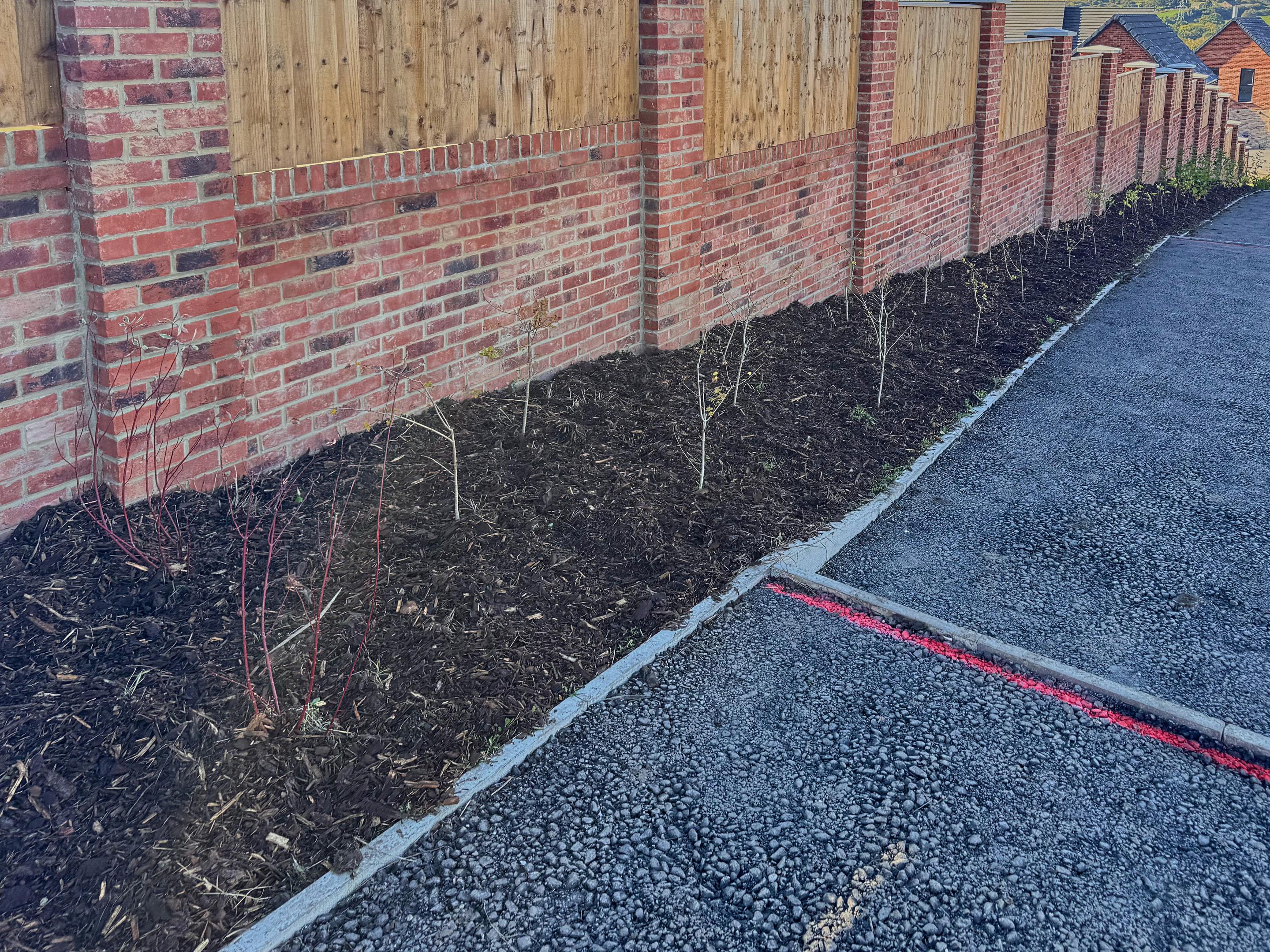
- Mulch round trees, shrubs and other permanent plants with organic matter, which cuts down cracking in summer and holds water in. The RHS advises a layer at least 5cm thick, and ideally 7.5cm.
- Build raised beds where drainage is poor. They lift the roots above the wettest ground and keep feet off the soil.
- Try a no-dig approach, especially in raised beds. The RHS notes that it suits clay soils well, because you add organic matter on top and leave the soil's structure alone.
- Try calcium. Some clays, though not all, clump into larger crumbs when calcium is added. On acid clay, use garden lime; on clay that is not acid, use gypsum, the active ingredient in many "clay improvers". Test it on a small patch first, to see if your clay responds.
None of this is quick. Organic matter added every year, as a mulch or dug in, slowly darkens and opens the soil.
We sell compost alongside the plants in Rixton. Ask the team which suits digging into clay.
Take care
Wear gloves and eye protection when you spread lime or gypsum, follow the instructions on the pack, and keep children and pets off the area until it has been watered in or rained on. Do not add lime near acid-loving plants such as rhododendrons. Clay is heavy: lift small loads, bend your knees, and use a barrow. Before you dig deeply, find out where any drains, pipes and cables run.
Part 5
Why sand and grit rarely help
It sounds sensible to dig sand or grit into clay to open it up. The RHS explains why it seldom works in a garden.
Clay particles are so tiny, and there are so many of them in each handful, that they dominate the soil. Sand and grit particles are far larger and far fewer, so a little added sand makes very little difference. In a clay with 40 per cent clay particles, which is modest for a heavy clay, the RHS works out that halving the clay in the top layer would take about 250kg of grit or gravel for every square metre. Adding the wrong amount can even make the clay less stable and harder to manage.
On a small scale, such as a planting pocket for a single alpine, grit can help. For a whole border, the RHS points to raised beds, organic matter and the right plants as the practical answers.
If you do use sand, the RHS points out that builders' sand is not the same as the washed sharp sand sold for gardening.
Part 6
Plants for clay soil
Choose plants that like clay, rather than fighting it. The RHS finds that trees, shrubs (especially roses), climbers and many bulbs are easier to grow on clay than plants that need sowing, planting or dividing often, such as annuals and bedding.
The plants named here are examples from the RHS list of plants for clay soils. What we have changes through the year, so ask us what is ready this week, and bring the details of your soil.
Trees and shrubs
Roses grow especially well on clay, the RHS says. Among its top performers on clay are mahonia, viburnum and the whitebeam Sorbus aria 'Lutescens'. Its longer list includes crab apples, hawthorn, birch, holly and cotoneaster.
Climbers and wall shrubs
For walls and fences, the RHS list for clay includes honeysuckle, flowering quince (chaenomeles), pyracantha and escallonia. A climber on a fence takes up very little of a heavy border.
Perennials
For borders, the RHS names hardy geraniums among its top five plants for clay. Its list also includes astilbes, hostas, rudbeckias, Michaelmas daisies (Symphyotrichum), alchemilla and phlox. Many of these like the moisture clay holds through the summer.
Bulbs and bedding
Many bulbs settle well on clay. Bedding plants, which go in each spring or autumn and come out again, are harder work on heavy ground, because the soil has to be worked often. They do well in a raised bed or in pots of compost, where the clay does not matter.
All of our bedding is grown here from the start, and the team can tell you which of the plants that are ready suit a heavier soil.
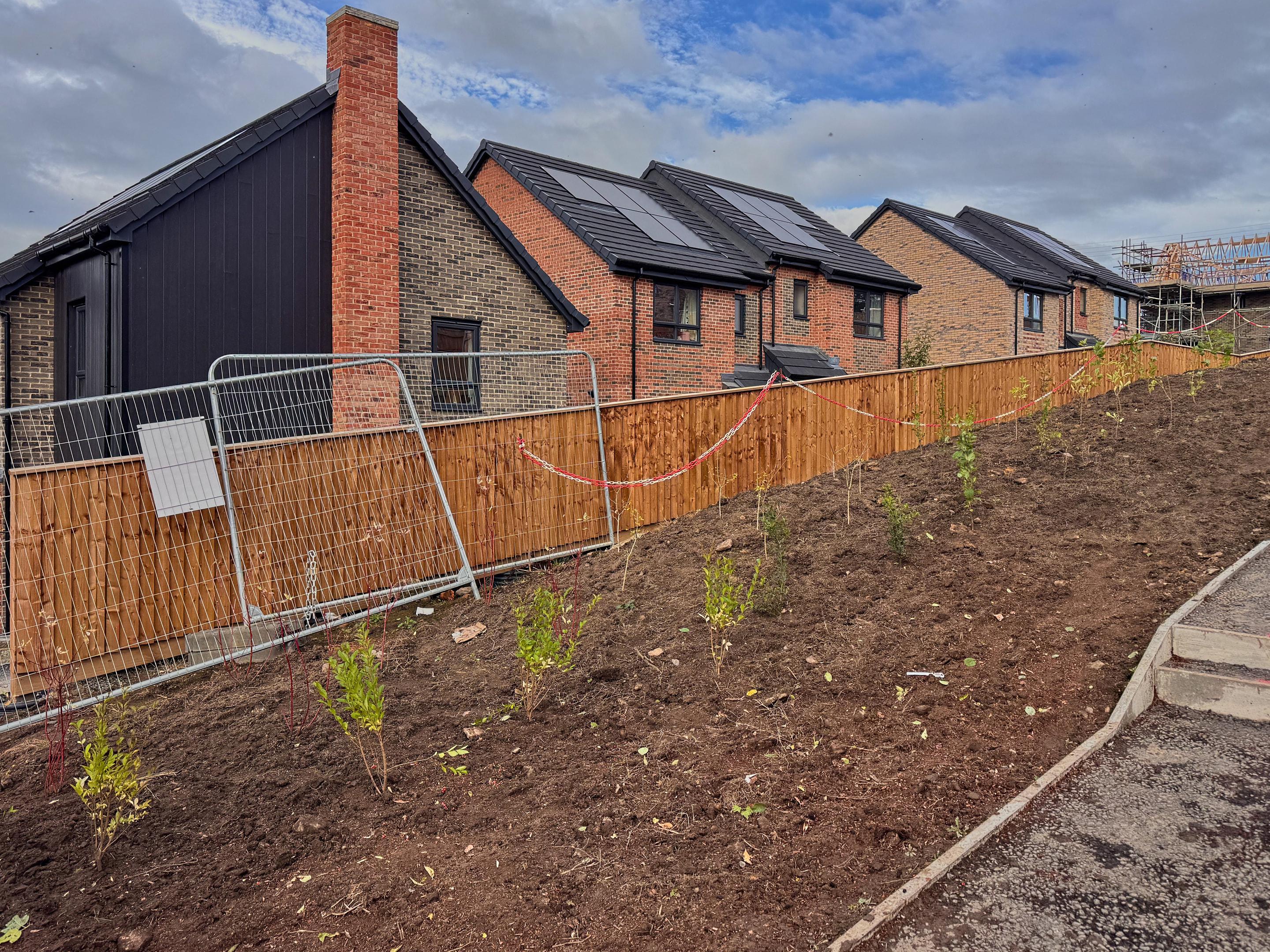
On new-build gardens, we start with tougher planting, such as hedging and shrubs that cope with poor drainage while the soil recovers. The fussier perennials go in once the beds have had a season to settle. The RHS finding at the top of this part points the same way on any heavy clay.
Part 7
Planting into clay
Plant trees, shrubs and climbers when the ground is dry enough to work. The RHS suggests early autumn, while the soil is still workable. Its plant list for clay adds that on heavy clay you can wait until late winter or early spring, so dormant roots spend less time sitting in cold, wet ground. Avoid planting into waterlogged soil in the depths of winter.
- Dig the hole no deeper than the roots, and wider than you think you need.
- Break up the bottom of the hole and loosen its sides with a fork. The RHS warns that smooth, unbroken sides turn the hole into a sump, where water collects and the roots drown.
- Mix organic matter into the soil you put back, rather than packing it into the bottom of the hole.
- On heavy soil, the RHS notes that a square hole helps a tree or shrub, because roots grow out more easily at the corners than round a smooth circle.
- On very heavy ground, plant woody plants on a low mound, about 25cm high, so the roots sit above the wettest soil.
- Firm the soil gently round the roots and water the plant in.
- In spring, mulch with a 7.5cm layer of well-rotted organic matter, leaving a 7.5cm gap round the stems so they do not rot.
Keep the mulch topped up every year. The RHS notes that a mulch kept up over the years slowly improves the soil all the way down.
When the team plan a planting job, one of us comes out first to look at the soil, the light and the access with you. On clay, the soil decides what goes in and when.
For a new garden, read choosing plants for a new-build garden.
Part 8
Lawns and paths on clay
Lawns on clay are often too wet to walk on for long spells in winter, and the RHS notes that they are prone to worm casts. Lay paths or stepping stones where you walk most, so you are not treading the wet clay down.
For a new lawn on very heavy clay, the RHS describes the method golf courses use: turf laid on a layer of sharp sand 7.5 to 15cm deep. It is a big job, but it can be done in a garden.
On an existing lawn, keep off it when it is waterlogged, and brush worm casts away once they have dried, before you mow. Clay lawns stay wet longer after rain, so leave the first cut of spring until the ground is firm underfoot.
See what we have in trees and shrubs and in perennials and bedding, or read more in the Gardener's Secrets guides.
Planting on clay?
Bring the details of your soil and ask us what is ready.
Ask us at the nursery
196 Manchester Road, Rixton. Bring a description of your soil and your questions about planting on clay.
Winter hours, until April · Mon to Sat, 9:00am – 4:30pmSundays closed